

- Home
- Who we are
-
What we do
- Cultural heritage
- Regional arts
- A new National Cultural Policy
-
Arts and Disability
- Arts Accessibility
- Arts and Screen Employment Pathways Pilot Program
- Equity: the Arts and Disability Associated Plan
- Implementation Advisory Group for Equity—Expression of Interest process
- Implementation Advisory Group for Equity—First Nations Expression of Interest process
- Publications and resources
- Helpful links
- Support at work
- Creative Australia
-
Indigenous arts and languages
- Australian Delegation to the Festival of Pacific Arts 2016
- ILA Program logos
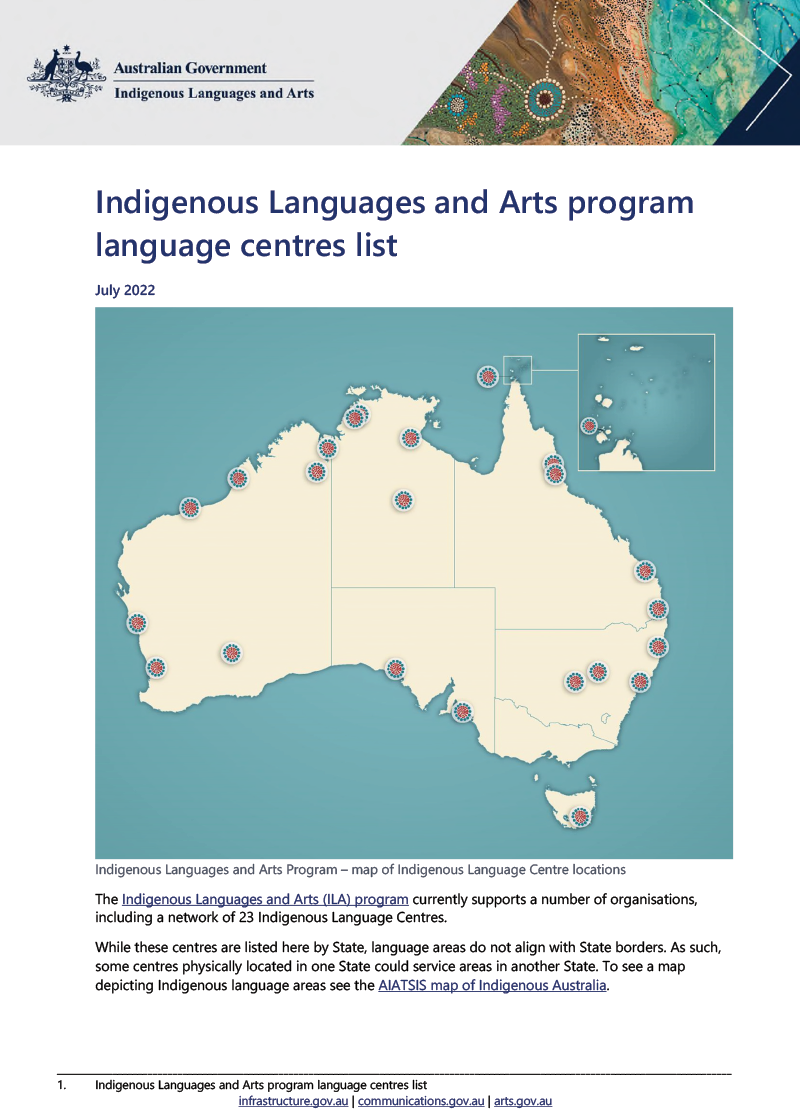
- Indigenous Languages and Arts program
- Indigenous Visual Arts Industry Support program
- International Decade of Indigenous Languages
- Protecting First Nations traditional knowledge and traditional cultural expressions
- Review of the Indigenous Art Code
- Literature
- Ministerial Intergovernmental Engagement
-
Museums, libraries and galleries
- Alt text for National Cultural Institution Key Performance Indicator Infographics 2021–22—results and trends
- Australian Government International Exhibitions Insurance Program
- Impact of our National Cultural Institutions
- National Cultural Institution KPI Infographics 2020–21—results and trends (including text version)
- Significance 2.0
- The National Collecting Institutions Touring and Outreach program
- National Cultural Policy
- Performing arts
- Screen
- Significance
- Visual arts
- Have your say
- Funding
- Publications
- News
The return coincides with the 60th anniversary of diplomatic relations between Australia and Mexico.
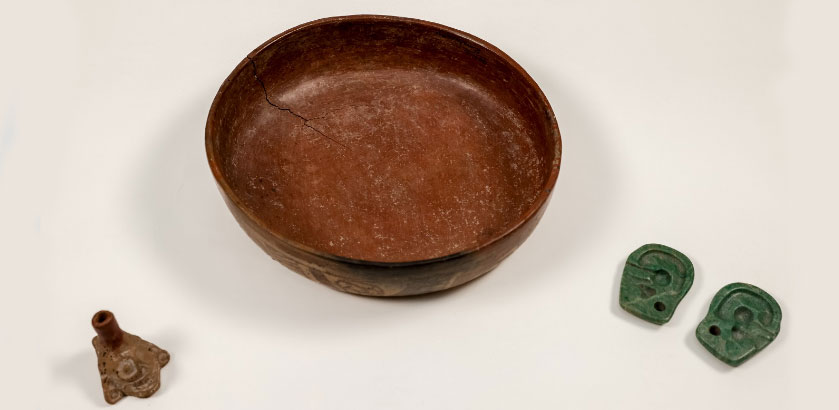
A ceremony was held at the Embassy of Mexico in Canberra on 13 March to formally return culturally significant objects to their rightful home.
The objects were detected by the Australian Border Force on their import into Australia in 2023. They were later confirmed to have been illegally exported from Mexico, where they are classified as archaeological monuments.
The returned objects are:
- Pair of ear-shaped plaques (1500–400 BCE): Made in Mexico during the Olmec civilisation, these plaques were crafted from metamorphic rock (jadeite or serpentinite) and likely formed part of an anthropomorphic mask.
- Bowl (100–500 CE): From the Zacatecas region of Mexico, this painted ceramic bowl is associated with a funerary tradition known as tumbas de tiro (shaft tombs). Tumbas de tiro consist of deep shafts connecting to underground chambers containing multiple burials and ceramic offerings, which symbolised the return to the maternal womb.
- Whistle (1200–1521 CE): Created in Mexico during the Aztec Empire, this ceramic whistle represents a skull and was likely an instrument used in ceremonies.
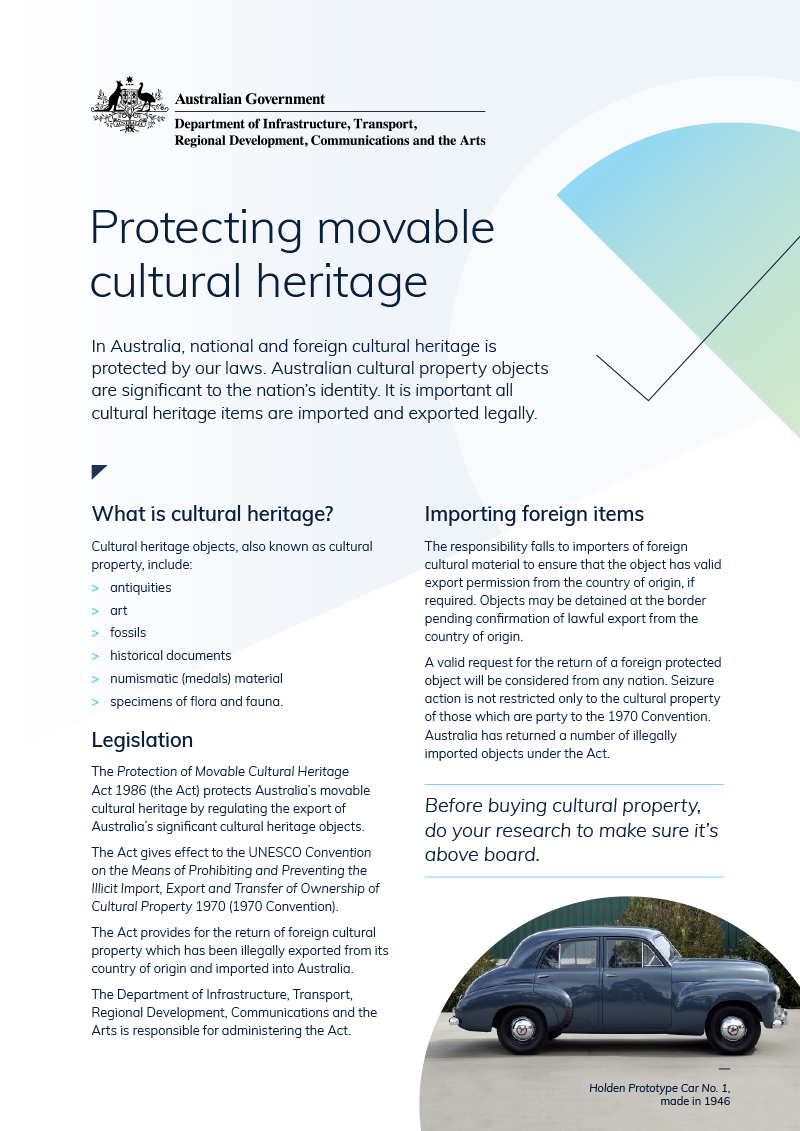
The return of these and other protected foreign cultural objects is made possible through the Protection of Movable Cultural Heritage Act 1986 (the Act).
The Act regulates the export of objects of cultural significance to Australia, and provides for the return of foreign cultural objects that have been illegally exported from other countries.
Find out more
- Read the Minister's media release.
- Visit our Movable cultural heritage page
Funding programs
Latest news
Ancestral breastplate returned to Country
The 19th century First Nations breastplate is of cultural and historical significance for the Gundungurra people in southeastern New South Wales.
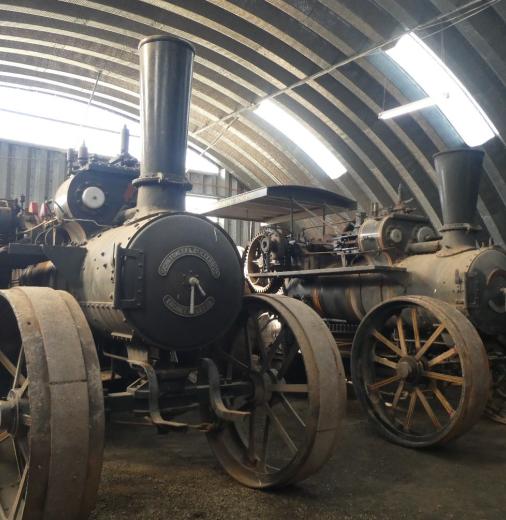
100-year-old steam engines return to Tasmania
A pair of Fowler Ploughing Steam Traction Engines, Type Z7 named ‘The Lion’ and ‘The Lioness’ have been acquired by Pearn’s Steam World Museum in Westbury, Tasmania.
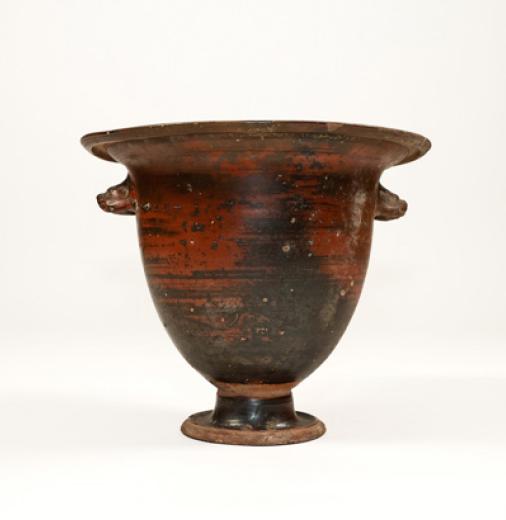
Ancient ceramic vase returned to Italy
The Australian Government has returned a culturally significant object to the Government of the Italian Republic.
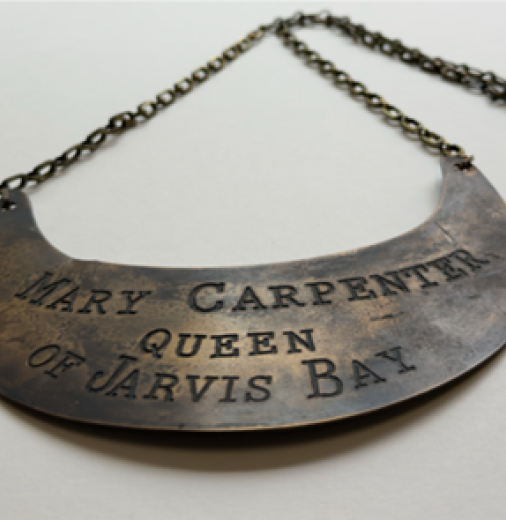
Piece of history returned to Country
A 19th century Aboriginal ancestral breastplate has been returned to Country, entrusted by the community to be held at the Jervis Bay Maritime Museum.
Have your say

A new National Cultural Policy
Between 23 March 2026 and 24 May 2026, Australians were invited to share their views and help guide the next National Cultural Policy. Public submissions are being uploaded to this page as they're being reviewed by us. Read the public submissions.
Arts and Screen Employment Pathways Pilot Program
We invited feedback on the development of the new Arts and Screen Employment Pathways Pilot Program to support d/Deaf and disabled artists and arts workers. This consultation is closed.
Review of the Indigenous Art Code
A review of the Indigenous Art Code to strengthen the protections for Indigenous artists and consumers across the country. This consultation is closed.
Revive: a place for every story, a story for every place
After extensive national consultation, in 2023 we delivered a 5 year national cultural policy, Revive—A place for everyone story, a story for every place.
Latest consultations
Review of the Protection of Movable Cultural Heritage Act
Shane Simpson AM finished a review of the Protection of Movable Cultural Heritage Act 1986 in 2015.
Funding programs

What's new
Getting the band together, but who pays their super?
Updated advice from the Australian Taxation Office (ATO) on who pays super to workers in the music industry.

A new page for Lending Rights
New legislation for the Lending Rights schemes commenced on 1 October 2026.

Sharing the National Collection hits 2 million visitor milestone
The Sharing the National Collection program enables galleries around the country to borrow works from the national collection for long-term display.
Australia's cultural and creative activity continues to grow
New figures show cultural and creative activity contributed $70.3 billion to Australia's economy in 2024–25.
Support programs
Displaying 131 - 140 of 274
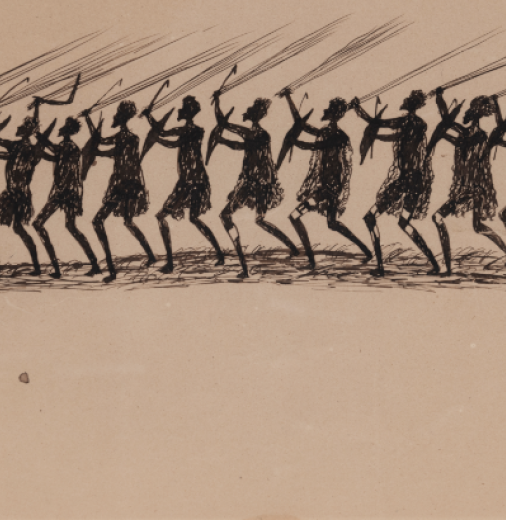
Rare First Nations drawing acquired
A rare drawing from one of the most important First Nations artists of the nineteenth century has been acquired.
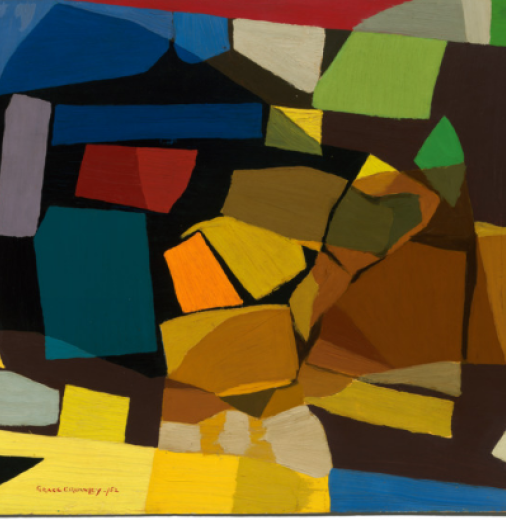
Sharing the National Collection with more Australians than ever before
The Australian Government continues to partner with galleries and cultural institutions under the groundbreaking initiative.
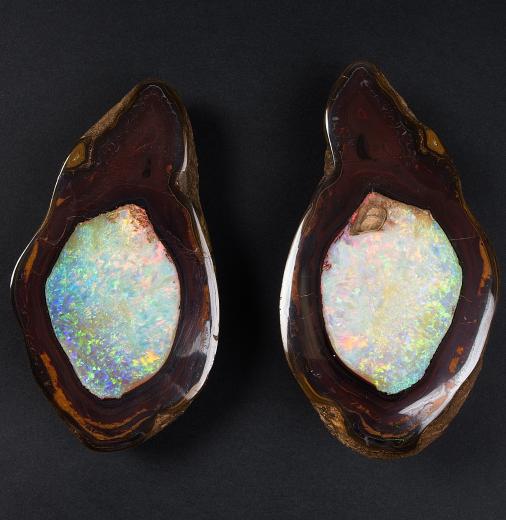
Geoscience Australia unveils a rare opal
The Yowah Moon opal, which is one of the rarest types of precious opals found in Australia, has recently been unveiled at Geoscience Australia with funding assistance from the National Cultural Heritage Account.
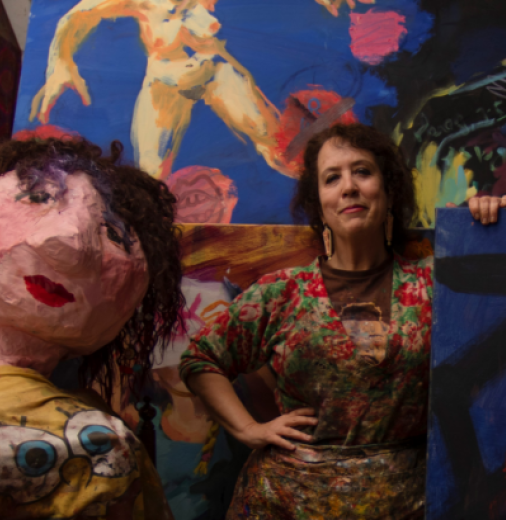
Resale Royalty Right Scheme extended to 17 countries
Artists will be entitled to royalty payments when their work is resold overseas after changes to the Resale Royalty Right Scheme to commence 31 March 2024.
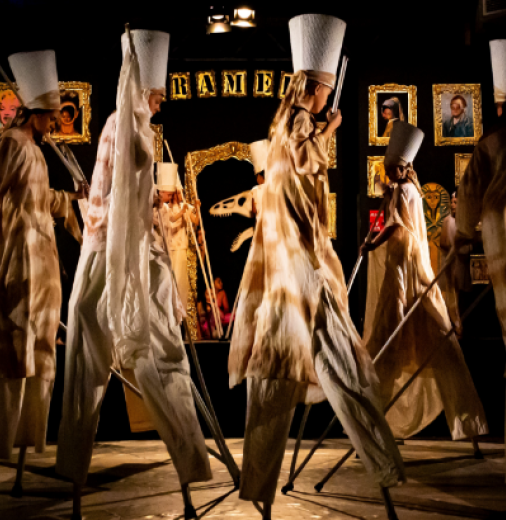
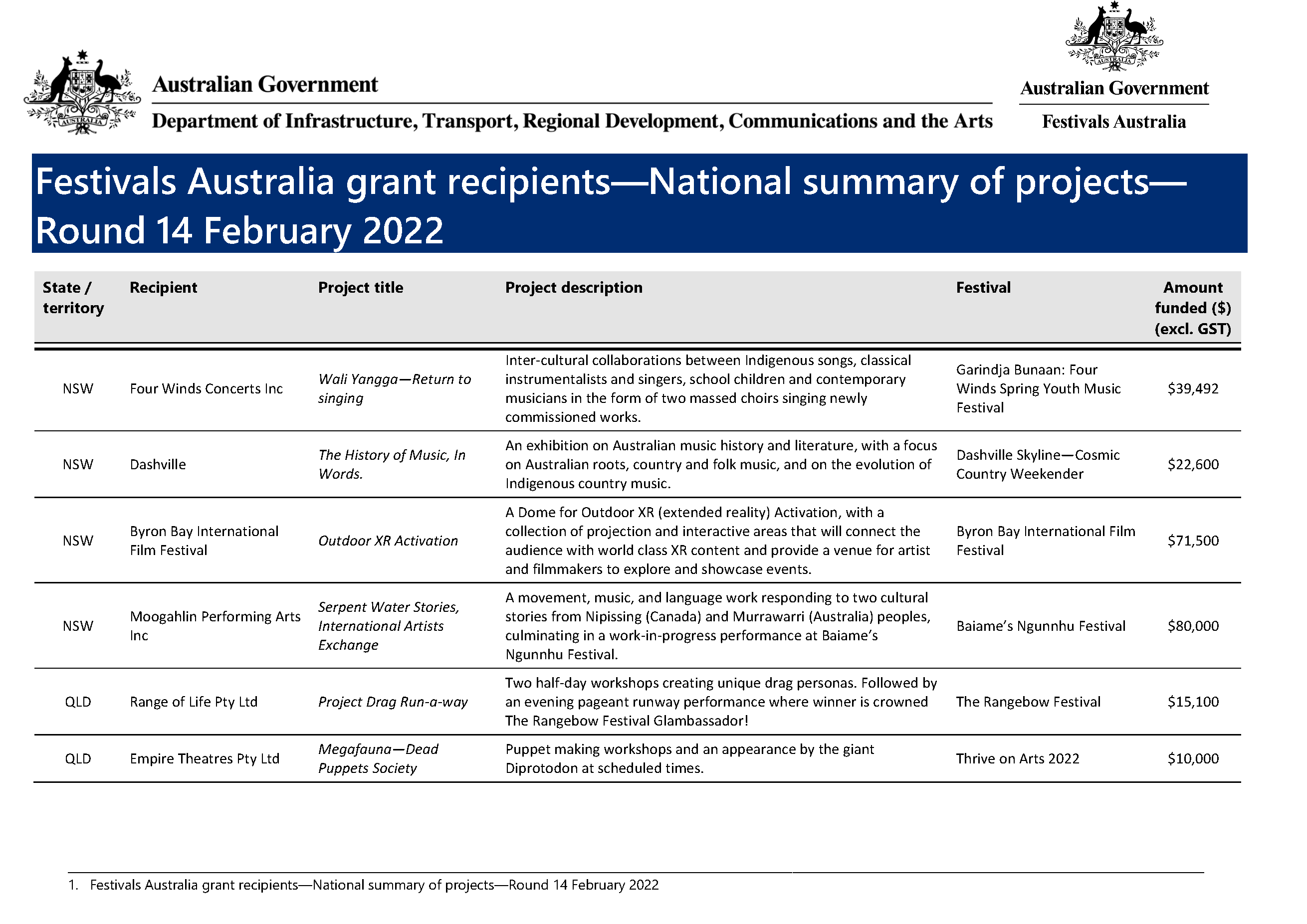
Festival projects to shine across the country
Close to $700,000 is being delivered to help arts projects reach new audiences and communities.
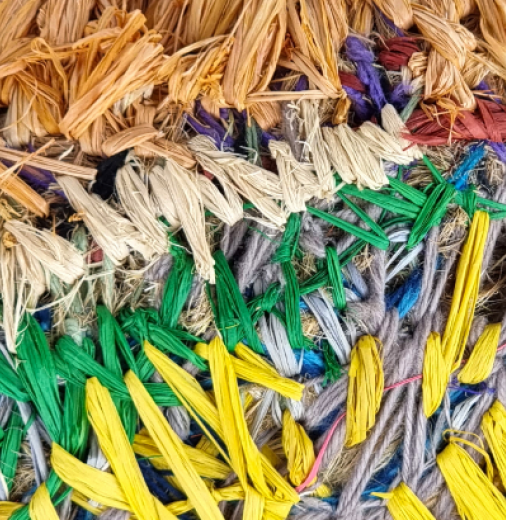
Seeking views on new laws to tackle fake Indigenous-style art
Have your say online before 30 June 2024.
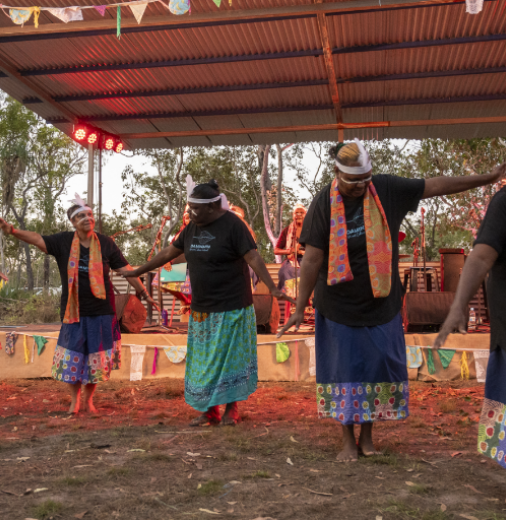
Applications open for Festivals Australia funding
You can now apply for funding for arts projects at regional and remote festivals or community celebrations.
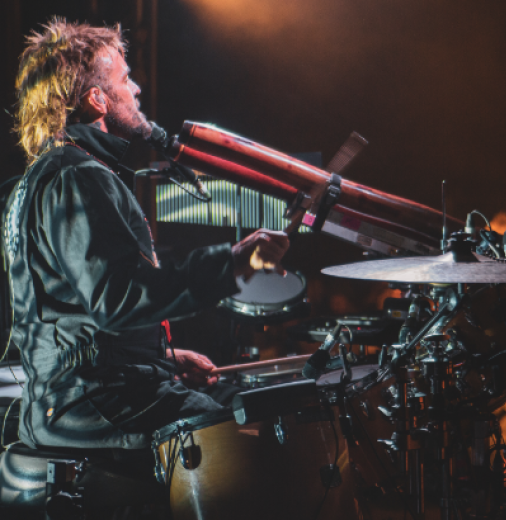
Live music grants to make venues sing again
The Australian Government is investing $2.5 million in small to medium live music venues across the country that host Australian gigs.
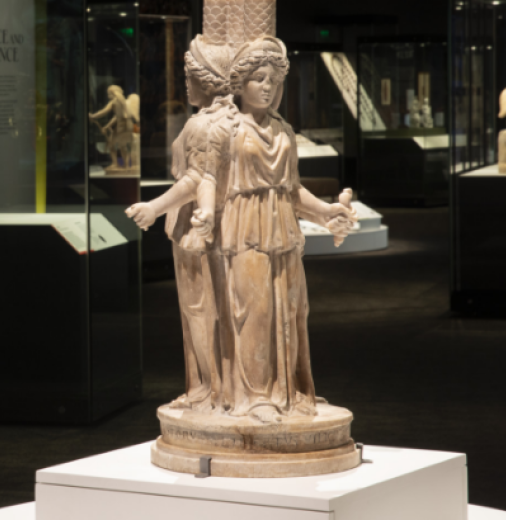
Apply now for international exhibition support
The Australian Government International Exhibitions Insurance (AGIEI) program is now open for applications.
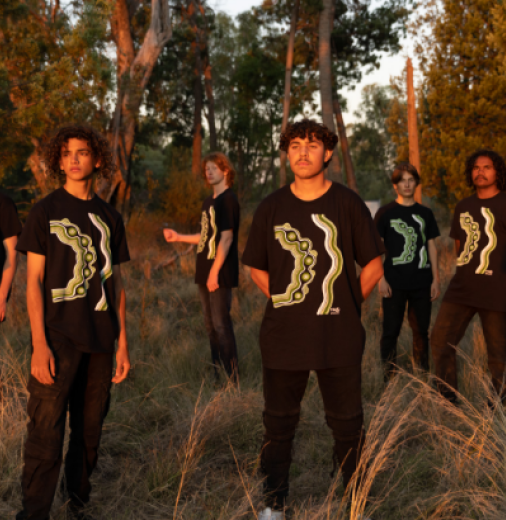
Support available for First Nations languages and arts activities
The Indigenous Languages and Arts Program (ILA) is now open for grant applications.
Support programs

Funding programs
No results found.
Displaying 157 - 168 of 357
Support programs
Sign up
Sign up for news and updates from our agency.
Displaying 81 - 90 of 869
National Opera Review - Final Report Appendix
Published: 25 Oct 2016 Sections of the Discussion Paper. These documents have not been produced by us and may not meet WCAG 2.0 Level AA requirements. Please contact us at publishing@communications.gov.au to obtain alternative copies. …
PublicationWriters to be fairly compensated
Australian authors, illustrators and publishers to be recompensed for their e-books and audiobooks being held in Australian libraries. 21 Mar 2023 A woman reads an e-book on a couch As announced under the Australia Government’s new National Cultural …
NewsRekindling program reconnects First Nations youth
A flagship dance and language program is reconnecting First Nations youth with their culture. 22 Mar 2023 ‘In learning about your culture you learn more about yourself’ – a participant sums up how the Bangarra Dance Theatre’s Rekindling program it is …
NewsART/works
ART/works provides subscribers with the latest news on funding opportunities, industry research and sector updates. Sent to your inbox as major news breaks, ART/works keeps you up-to-date with what's happening in Australia's cultural and creative sector, …
PageResearch confirms importance of live music workers
Our research highlights the diverse occupations of live music workers and their contribution to Australia’s social and cultural fabric. 27 Mar 2023 The contribution of live music to our creative economy has been confirmed following the release of the …
NewsLive gigs back in the spotlight
Program provides support for venue-based music 29 Mar 2023 $2.5 million in targeted funding is available under Round Six of the Live Music Australia Program. The funding will assist live music venues as they rebuild following the impacts of the pandemic, …
NewsNational Opera Review - Final Report
Published: 25 Oct 2016 The National Opera Review was asked, under its Terms of Reference, to make recommendations aimed at promoting the financial viability, artistic vibrancy and accessibility of Australia’s four Major Opera Companies, namely Opera …
PublicationELR Policies and Procedures 2023
Published: 31 Mar 2023 ELR Policies and Procedures 2023 (Word) (DOCX, 153.92 KB) ELR Policies and Procedures 2023 (PDF) (PDF, 344.27 …
PublicationTrove funding secured in 2023-24 Federal Budget
The Australian Government will commit $33 million in funding over four years in the coming Budget, preserving Australia’s most significant cultural and historical resource. 4 Apr 2023 Photo: Damian McDonald Australia’s most important collection of digital …
NewsRare Canadian cultural objects dating back to 19th Century to return home
Museums Victoria will repatriate 6 highly significant cultural items back to their Indigenous community in Canada with the assistance of the Australian Government. 3 Apr 2023 (clockwise from top left: smoking pipe, ornate cloak, pouch, leggings, broach, …
NewsFunding and support program archive
No results found.