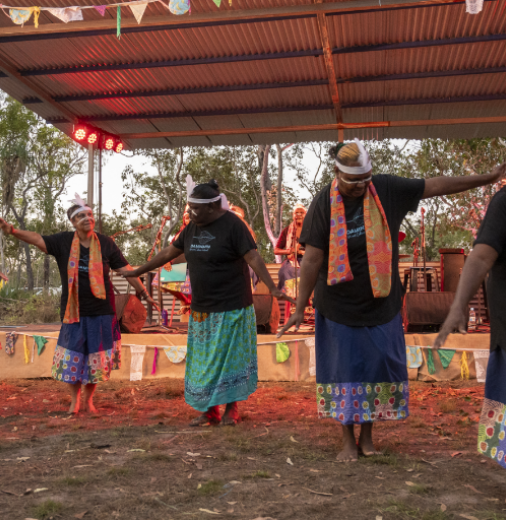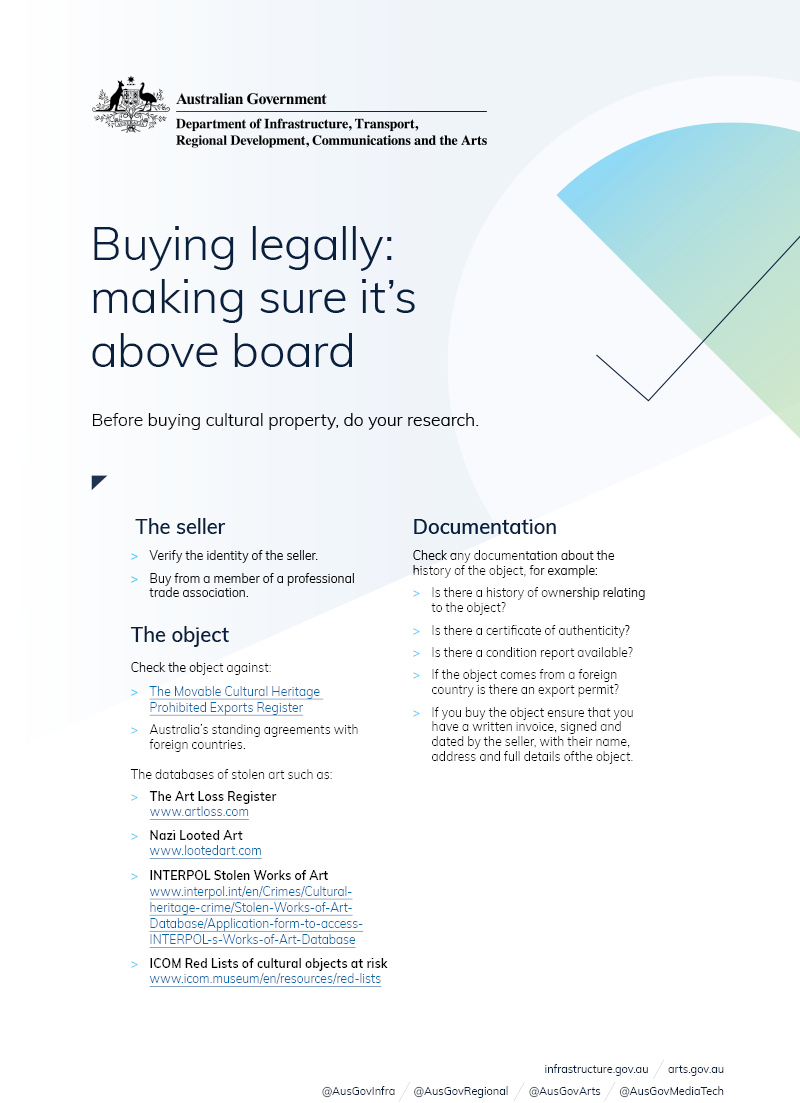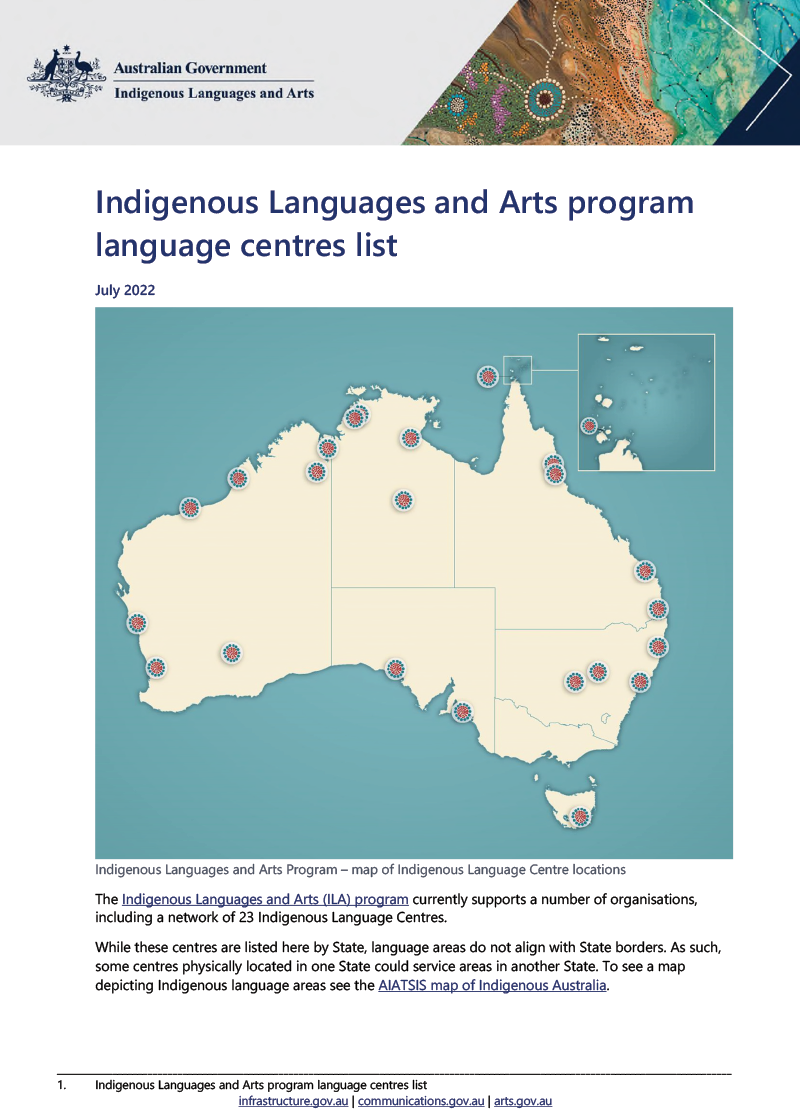

Thank you to everyone who attended a community engagement session and shared their knowledge, views and lived experience. Feedback received will help inform and shape important new laws to protect Indigenous Cultural and Intellectual Property rights.
We held 43 face-to-face community engagement sessions in 38 locations across each state and territory as well as 3 online sessions. These sessions welcomed all Aboriginal and Torres Strait Islander peoples and relevant stakeholders from the arts and cultural sector to discuss what should be included in the new legislation addressing the harm caused by fake Aboriginal and Torres Strait Islander style art, merchandise and souvenirs.
For a snapshot of the key themes that emerged during the sessions, read the overview of the 2024 community consultation sessions.
Read about the topics discussed at the community engagement sessions.
If you would like to discuss protection of Indigenous Cultural and Intellectual Property rights please contact the team.
Office hours 8:30am to 5pm (AEST)
Phone: 1800 006 992 (opt 4)
Email: icip@arts.gov.au
| Location | Date | Registration |
|---|---|---|
| Australian Capital Territory | ||
| Canberra | Monday, 6 May 2024 2:00pm to 5:00pm AEST | Completed |
| New South Wales | ||
| Albury-Wodonga | Monday, 8 April 2024 10:00am to 1:00pm AEST | Completed |
| Coffs Harbour | Monday, 11 March 2024 10:00am to 1:00pm AEDT | Completed |
| Dubbo | Wednesday, 10 April 2024 10:00am to 1:00pm AEST | Completed |
| Lismore | Tuesday, 12 March 2024 10:00am to 1:00pm AEDT | Completed |
| Moree | Friday, 12 April 2024 10:00am to 1:00pm AEST | Completed |
| Parramatta | Friday 5 April 2024 2:00pm to 5:00pm AEDT | Completed |
| Sydney | Thursday, 4 April 2024 10:00am to 1:00pm AEDT | Completed |
| Tweed Heads | Wednesday, 13 March 2024 9:00am to 12:00pm AEDT | Completed |
| Wagga Wagga | Tuesday, 9 April 2024 10:00am to 1:00pm AEST | Completed |
| Walgett | Thursday, 11 April 2024 10:00am to 1:00pm AEST | Completed |
| Wollongong | Wednesday, 3 April 2024 10.30am to 1.30pm AEDT | Completed |
| Northern Territory | ||
| Alice Springs | Monday, 25 March 2024 1:30pm to 4:30pm ACST | Completed |
| Darwin | Tuesday, 16 April 2024 10:00am to 1:00pm ACST | Completed |
| Katherine | Wednesday, 17 April 2024 11:00am to 2:00pm ACST | Completed |
| Yirrkala | Thursday, 18 April 2024 11:00am to 2:00pm ACST | Completed |
| Queensland | ||
| Brisbane | Thursday, 11 April 2024 10:00am to 1:00 AEST | Completed |
| Cairns | Friday, 12 April 2024 10:00am to 1:00 AEST | Completed |
| Gold Coast | Tuesday, 23 April 2024 10:00am to 1:00 AEST | Completed |
| Mount Isa | Friday, 26 April 2024 10:00am to 1:00pm AEST | Completed |
| Rockhampton | Monday, 22 April 2024 10:00am to 1:00pm AEST | Completed |
| Sunshine Coast | Wednesday, 24 April 2024 10:00am to 1:00pm AEST | Completed |
| South Australia | ||
| Adelaide | Monday, 18 March 2024 2:00pm to 5:00pm | Completed |
| Adelaide | Tuesday, 19 March 2024 10:00am to 1:00pm | Completed |
| Ceduna | Thursday, 14 March 2024 11:00am to 2:00pm | Completed |
| Port Augusta | Friday, 15 March 2024 12:30pm to 3:30pm | Completed |
| Tasmania | ||
| Burnie | Monday, 4 March 2024 10:00am to 1:00pm AEDT | Completed |
| Launceston | Tuesday, 5 March 2024 10:00am to 1:00pm AEDT | Completed |
| Hobart | Wednesday, 6 March 2024 10:00am to 1:00pm AEDT | Completed |
| Hobart | Thursday, 7 March 2024 10:00am to 1:00pm AEDT | Completed |
| Torres Strait Islands | ||
| Thursday Island | Monday, 15 April 2024 | Completed |
| Victoria | ||
| Bairnsdale | Friday, 8 March 2024 2:00pm to 5:00pm AEDT | Completed |
| Ballarat | Wednesday, 13 March 2024 10:00am to 1:00pm AEDT | Completed |
| Melbourne | Thursday, 14 March 2024 10:00am to 1:00pm AEDT | Completed |
| Melbourne | Friday, 15 March 2024 10:00am to 1:00pm AEDT | Completed |
| Shepparton | Tuesday, 12 March 2024 9:00am to 12:00pm AEDT | Completed |
| Shepparton | Tuesday, 12 March 2024 1:00pm to 4:00pm AEDT | Completed |
| Western Australia | ||
| Broome | Tuesday, 23 April 2024 2:00pm to 5:00pm AWST | Completed |
| Geraldton | Tuesday, 30 April 2024 10:00am to 1:00pm | Completed |
| Kununurra | Monday, 22 April 2024 | Completed |
| Perth | Monday, 29 April 2024 10:00am to 1:00pm | Completed |
| Port Hedland | Wednesday, 1 May 2024 3:00pm to 6:00pm | Completed |
| National | ||
| Online sessions | Monday, 3 June 2024 | Completed |
| Online sessions | Friday, 14 June 2024 | Completed |
| Online sessions | Wednesday, 26 June 2024 | Completed |
Topics for discussion
Scope of the legislation
We are taking a staged approach to developing the legislation. The first stage will address the harm caused by fake Aboriginal and Torres Strait Islander style art, merchandise and souvenirs. Later stages will address the broader rights relating to Indigenous cultural and intellectual property.
We heard from Aboriginal and Torres Strait Islander peoples on the following questions that guided the community engagement sessions held earlier this year. These sessions welcomed all Aboriginal and Torres Strait Islander peoples and relevant stakeholders from the arts and cultural sector to discuss what should be included in the new legislation addressing the harm caused by fake Aboriginal and Torres Strait Islander style art, merchandise and souvenirs.
For a snapshot of the key themes that emerged during the sessions, read the overview of the 2024 community consultation sessions.
Inclusions
1. Which aspects of ICIP do you want protected under the new law?
- All art forms, symbols and designs?
- Languages?
- Medicine?
- Traditional foods?
- Biotechnology?
- Ecological knowledge?
- Spiritual knowledge?
- Artificial intelligence and emerging technologies?
2. What are the rights for Traditional Owners that you want to see protected?
Key concepts
3. What should be the key principles and objectives of the new law?
- Free, informed and prior consent
- Cultural harm—the harm caused by the use of appropriation of Aboriginal and Torres Strait Islander art and culture.
Key terms and definitions
4. Which terms do you prefer:
- Indigenous/First Nations/Aboriginal and Torres Strait Islander?
- Ownership/Custodianship?
- Traditional Owner/ Traditional Custodian?
5. How should harm caused by breaches of cultural rights be addressed?
Acknowledgment
6. How should acknowledgement of rights be addressed?
Communal ownership
7. How should communal custodianship/ownership of ICIP be recognised when several families may have rights to a design/symbol/style/story?
8. How should decisions to approve the use of ICIP be made?
9. How should free, informed and prior consent be ensured?
10. Who will speak for community? Who will be the rights holders?
11. How should ICIP disagreements be resolved within communities?
Enforcement
12. How do Traditional Owners/ Custodians want to take action against possible breaches of their cultural rights?
- Independently?
- With the assistance of a central cultural authority?
- Government or a Government agency to take action on their behalf?
Other measures
13. What assistance would help Traditional Owners to protect their art?